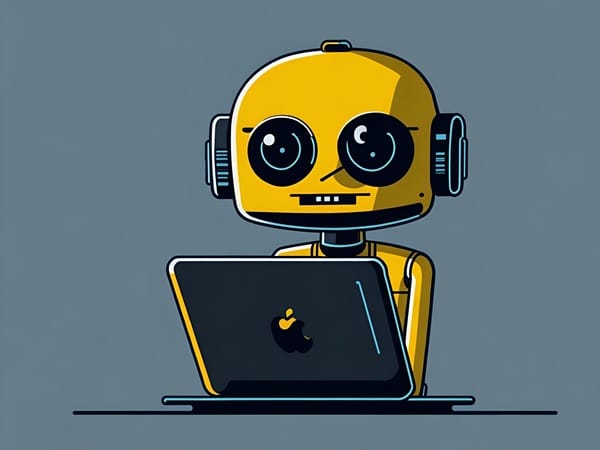
The question of whether **robots** can truly **emulate** the **human brain** captivates experts across **neuroscience**, **artificial intelligence** (**AI**), **robotics**, and **philosophy**. Advances in technology have produced impressive AI systems and robotic platforms, yet fully replicating the brain’s profound complexity—encompassing **reasoning**, **emotion**, **creativity**, **consciousness**, and **self-awareness**—remains a distant and perhaps unattainable objective. The **human brain**, containing roughly **86 billion neurons** (with recent analyses suggesting estimates range between approximately 60 and 100 billion) and trillions of synaptic connections, forms an extraordinarily dynamic biological network. This paper examines the brain’s core features, current progress in **AI** and **robotics**, key barriers to emulation, and the broader **philosophical** and **ethical** ramifications.
The Intricate Architecture of the Human Brain
At its foundation, the **human brain** comprises **neurons** as basic processing units. Each neuron features a **cell body** (soma), **dendrites** for receiving inputs, and an **axon** for transmitting outputs. Communication occurs at **synapses**, junctions enabling electrical and chemical signaling between cells. The brain includes excitatory and inhibitory neuron types that balance network activity, while specialized regions govern distinct functions: the **prefrontal cortex** handles executive decision-making and planning, the **limbic system** manages emotions and memory, and the **occipital lobe** processes visual information.
A defining trait is **neuroplasticity**, the brain’s capacity to reorganize synaptic connections in response to learning, experience, or injury. This adaptability underpins lifelong development and resilience, far surpassing rigid computational systems. **Cognitive processes** extend beyond mere computation to include **perception**, **memory** formation and recall, **language** comprehension and production, **problem-solving**, and **creative insight**. Humans integrate sensory data intuitively, draw abstract inferences, and exhibit **common sense** reasoning—abilities rooted in holistic, parallel processing rather than sequential algorithms.
Language exemplifies this sophistication. It functions not merely as communication but as a powerful computational framework. Humans manipulate a finite vocabulary through grammatical rules to generate infinite meaningful expressions, infer implicit meanings, correct errors, predict outcomes, and integrate multimodal elements like gestures or actions. As cognitive psychologist Karl Lashley noted in 1951, language links closely to action planning, suggesting it serves as a general mechanism for organizing behavior and thought.
Progress in AI and Robotics
Contemporary **AI**, driven by **deep learning** and **neural networks**, has achieved remarkable feats. Systems excel at **pattern recognition** in image classification, natural language processing, and strategic games, often surpassing human performance in narrow domains. **Large language models** generate coherent text, while reinforcement learning enables agents to master complex environments through trial and error.
In **robotics**, applications span manufacturing precision, surgical assistance, and service interactions. Platforms like Honda’s ASIMO (historical) and SoftBank’s Pepper demonstrate perception, command understanding, and basic emotional cue recognition via **affective computing**. **Neuromorphic computing**—hardware mimicking neural structures—has advanced significantly. Recent developments include Intel’s Loihi series and IBM’s North Pole architecture, emphasizing energy-efficient, event-driven processing. By 2025–2026, neuromorphic chips target edge devices, autonomous systems, and low-power AI, with breakthroughs in 2D materials enabling sub-100 mV switching and femtojoule energy use. Projects explore **spiking neural networks** (SNNs) and optoelectronic synapses for brain-like efficiency.
Advancements in AI and Robotics
Deep learning and artificial neural networks (ANNs) drive breakthroughs in pattern recognition, enabling superhuman performance in image analysis, speech synthesis, strategic games, and natural language tasks. Large language models generate fluent text, while reinforcement learning supports adaptive behavior in simulated environments. In robotics, systems handle precision manufacturing, medical procedures, and social engagement. Platforms demonstrate command interpretation and basic emotional cue detection through affective computing. Neuromorphic computing—hardware mimicking neural dynamics—has accelerated dramatically. By early 2026, chips like Intel’s Loihi 3 (8 million neurons, 64 billion synapses on 4nm process), IBM’s North Pole (in production, 25x more energy-efficient than GPUs for vision tasks), and Brain Chip’s Akida 2.0 enable low-power, event-driven processing. These deliver real-time sensory handling, continuous learning, and extreme efficiency (1/1000th GPU power in some cases), targeting edge AI, robotics, and autonomous systems. Spiking neural networks (SNNs) and optoelectronic synapses further bridge biological inspiration and silicon realization. Cognitive robotics incorporates these for perception-action cycles and adaptive responses.
Persistent Barriers to Full Emulation
Scale alone does not suffice; fundamental differences persist. Complexity and adaptability involve dynamic biochemical modulation and parallel processing. AI models often demand enormous data and struggle with out-of-distribution scenarios, lacking human-like intuition or minimal-example generalization.
Emotional intelligence remains superficial. Systems detect expressions or tone and respond via scripts, but absence of subjective experience (qualia) precludes genuine empathy, tied to biological embodiment, hormones, and personal narrative.
Consciousness and self-awareness pose the greatest hurdle. No current system exhibits unified subjective experience. Recent work—such as trans-neurons (artificial neurons flexibly mimicking vision, planning, or movement regions) and large-scale simulations (e.g., cortical-scale spiking networks on supercomputers like JUPITER)—advances functional modeling but does not produce phenomenal awareness. Theoretical consensus holds that consciousness likely requires specific biological substrates or causal architectures absent in silicon; claims of machine consciousness remain speculative or premature, with many arguing computation alone cannot yield it.
Philosophical and Ethical Dimensions
Brain emulation challenges notions of human uniqueness. The Turing Test evaluates behavioral mimicry but fails to probe understanding or inner experience, necessitating advanced metrics. Societally, advanced systems risk job displacement in cognitive domains, emotional over-reliance altering relationships, and accountability gaps in autonomous decisions. If machines approach sentience, questions arise about moral status, rights, welfare, and “mind crime” (exploitation of conscious digital entities). Neurotechnology ethics—emphasized in frameworks like UNESCO’s 2025 Recommendation—highlight risks to mental privacy, consent, equity, and non-therapeutic misuse (e.g., workplace monitoring or behavioral influence). Commercial pressures may outpace safeguards, demanding transparent governance, public engagement, and standards for privacy and autonomy.
Conclusion
**Robots** and **AI** have progressed dramatically, mastering specialized tasks and approaching brain-inspired efficiency through **neuromorphic** innovations. However, full emulation of the **human brain**—with its **consciousness**, emotional depth, flexible generalization, and subjective experience—remains improbable in the foreseeable future. Barriers stem from biological embodiment, qualia, and architectural differences that silicon struggles to replicate authentically.
Interdisciplinary efforts in **neuroscience**, **AI**, **robotics**, and **ethics** are vital to guide responsible development. While machines may augment human capabilities profoundly, the essence of human cognition likely endures as uniquely biological. Vigilance over societal impacts will shape whether these technologies enhance or challenge our humanity. The pursuit illuminates both technological promise and the enduring mystery of the mind.
References
- McCarthy, J. (2007). “What is Artificial Intelligence?” Stanford Encyclopedia of Philosophy.
- Russell, S., & Norvig, P. (2020). “Artificial Intelligence: A Modern Approach.” Pearson.
- Brooks, R. (1991). “Intelligence without Reason.” Proceedings of the 12th International Joint Conference on Artificial Intelligence.
- Damasio, A. (1994). “Descartes’ Error: Emotion, Reason, and the Human Brain.” G.P. Putnam’s Son